Written by Mandy Rudd, GiGL’s CEO with extracts from GiGL’s newsletter
2026 is a year of significant anniversaries for GiGL (Greenspace Information for Greater London). We launched as a hosted local environmental records centre 20 years ago, having spent two years in a development phase with a clear goal of established diversified and sustainable revenue streams from our services. This development phase built on work I started 25 years ago this year, with the launch of our data search service for clients, and the setting up of our first ever service level agreement, with the London Borough of Redbridge. This development was thanks in large part to LB Redbridge’s new Nature Conservation Officer at the time, who had worked with Dorset Environmental Records Centre in a previous role and was keen to support what we were trying to achieve for Greater London.
All of this built on the work of London Wildlife Trust’s Biological Recording Project (BRP), which launched 30 years ago in May 1996 after a lot of preparatory work and a successful funding bid to Bridgehouse Estates Trust. Alistair Kirk started in post as the new Biological Recording Officer to set up what was essentially a pilot project that would demonstrate aspects of what a local records centre could do for nature and people in London.
Establishing robust systems to centralise and analyse data was essential to the project’s success, but bringing people and organisations on board with the idea so they could help shape its direction was even more important.
London’s First Biodiversity Data Systems
Alistair set up a version of Recorder 3, an MS-DOS based database developed in partnership by English Nature and the Wildlife Trusts that was designed to manage site and species data to a national standard.
The initial species data entry focused on London Wildlife Trust’s surveys of their nature reserves, then moved on to inputting the results of the Trust’s first stag beetle survey in 1997, and the People’s Trust for Endangered Species stag beetle survey in 1998.
Alongside setting up Recorder 3, Alistair was also creating London-wide GIS datasets from scratch, including mapping all of the Trust’s reserves, London’s Sites of Special Scientific Interest, Local Nature Reserves and Sites of Metropolitan Importance for the first time, an essential step towards the agreed approach to developing London’s biodiversity action plan. Whilst this may sound fairly straightforward, the challenges of developing a site-based system that linked to agreed boundaries and included unique site codes for the whole of Greater London were significant.
Stakeholder Support & Engagement
The Biological Recording Project was stakeholder led from the outset, and its advisory group was made up of representatives from London Ecology Unit, London Natural History Society, London Wildlife Trust, English Nature and the Environment Agency. A wider network of stakeholders were involved in various events organised by the BRP to showcase its work and that of its partners for the duration of the funded project.
Alistair also spent a lot of time running introductory sessions to the BRP for people from local and national organisations keen to see the progress the project was making and to see GIS in action, often for the first time. I joined the BRP as the assistant biological recording officer a year after it started.
From Project to Records Centre
Soon after the BRP began, the Wildlife Trusts launched a series of regional consultations to support a bid to the Esmée Fairbairn Charitable Trust for a UK-wide project developing the role of records centres within the National Biodiversity Network. The project focused on best practice in biological recording and standards for data exchange, verification and access.
Although the London Wildlife Trust was unsuccessful in its bid for London to become one of the three pilot areas in the NBN’s ‘Linking Local Records Centres’ project, the BRP still benefited greatly through Ralph Gaines, the Trust’s Head of Conservation, who sat on the Wildlife Trusts’ NBN Group. The project’s workshops and conferences also connected us with colleagues from more established records centres, who were generous in sharing their knowledge and experience.
In late 1999, Alistair left the Trust to become the manager of Surrey Biodiversity Information Centre, and despite the initial grant funding having run out, I was asked to step up into the now vacant biological recording officer role.
I attended the always brilliant annual conference for the National Federation for Biological Recording (NFBR) in 2000, as they continued to champion the local records centre network within the wider NBN. I learnt a lot, and found myself sitting on a train platform afterwards with Alistair in his new role in Surrey and Henri from the Sussex Biodiversity Records Centre comparing notes about the various challenges we had in common. We agreed it was really helpful to talk to people in a similar role, so we organised and held the inaugural meeting of the London and South East Local Records Centre group soon afterwards. We still meet to this day to collaborate, share ideas and offer sanctuary.
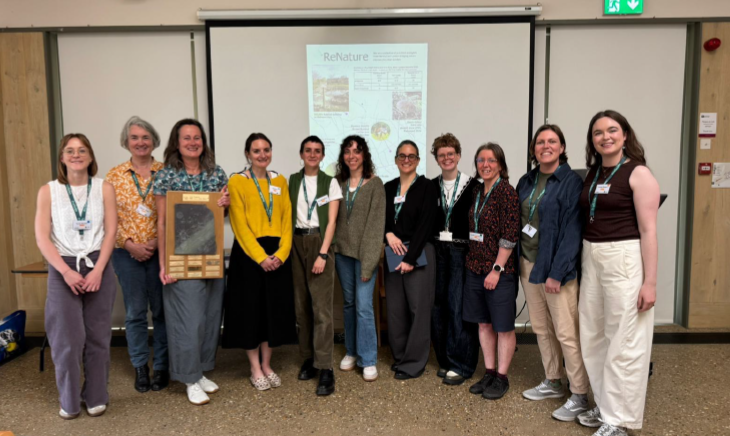
And after 30 years of nature data, people, and persistence, the proud GiGL team celebrated a successful London Day of Nature in mid May – complete with the NBN Open Data Award, which we won in November 2025!
You can read the full article here.