
About us
Shetland Biological Records Centre (SBRC)
Shetland Biological Records Centre (SBRC)
Shetland Biological Records Centre (SBRC) was established in 1998 by Shetland Amenity Trust (SAT) to gather information on Shetland’s biodiversity; to develop an understanding of its importance, and to make it easily accessible to a wide range of people and organisations. SBRC assists relevant organisations, agencies, businesses and the general public to safeguard Shetland’s rich natural heritage. They provide information about Shetland’s fauna, flora, habitats and geology and raise awareness of Shetland’s biodiversity.
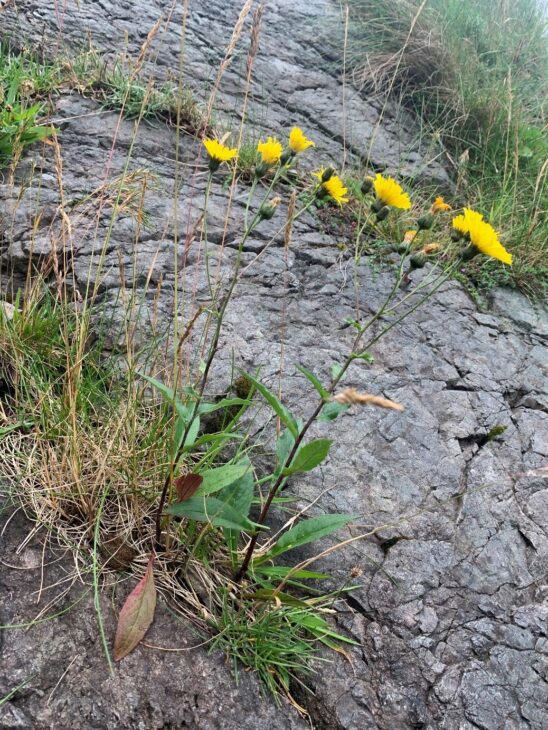
SBRC’s work often takes them into the field to study Hawkweeds (Hieracium spp). 27 species occur in Shetland – a fraction of the 400 species found in the UK – but 18 of these are endemic to the islands and are found nowhere else in the world. With the help of local recorders, and particularly the late Walter Scott, SBRC has not only been able to monitor and preserve these important plants, but also to bring one species back from extinction.
Hieracium hethlandiae (Cliva Hill Hawkweed) went extinct in the wild in 1976, primarily due to habitat destruction. Thanks to Scott, the species was harvested and cultivated, and the resulting plants, as well as specimens of all of Shetland’s endemic species, continue to be cultivated in SAT’s horticultural unit. With the cultivated population and a wealth of local knowledge at our disposal, Hieracium hethlandiae was successfully translocated to a new location in 2014, in an area close to its original site. SBRC and local enthusiasts regularly monitor the population to ensure it thrives, and SBRC is now collaborating with the Species on the Edge programme to identify and establish a new site for this species, giving it an even better chance of survival in the wild.
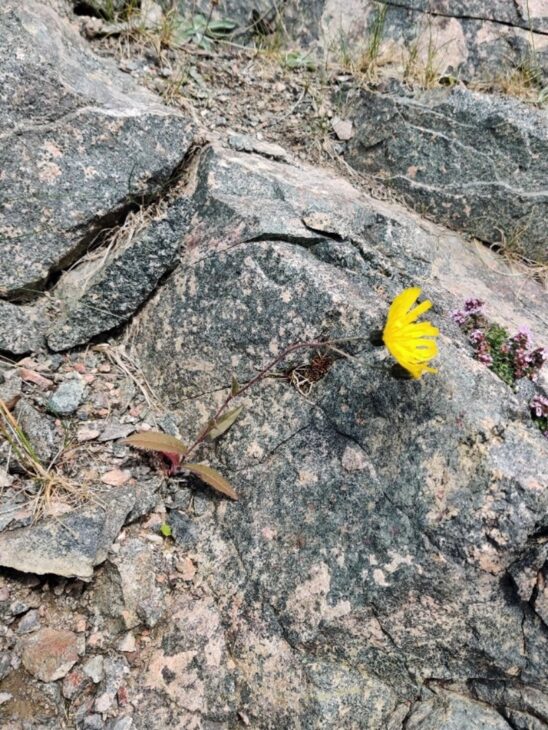
The reintroduction of Hieracium hethlandiae is about more than just saving a single species. The loss of endemic species has an impact on the surrounding ecosystem. By bringing this species back, and preserving other species, this helps to revive pollinator networks, reconnect fragmented landscapes, and promote biodiversity, all of which contribute to the overall health and resilience of Shetland’s ecosystems. This achievement would not have been possible without the invaluable knowledge from the SBRC database and the dedication of the recorders who know Shetland and its species so intimately.
This biodiversity data story was shared by Shetland Biological Records Centre with the Better Biodiversity Data project, led and managed by the NBN Trust and supported by NatureScot and The Scottish Government.